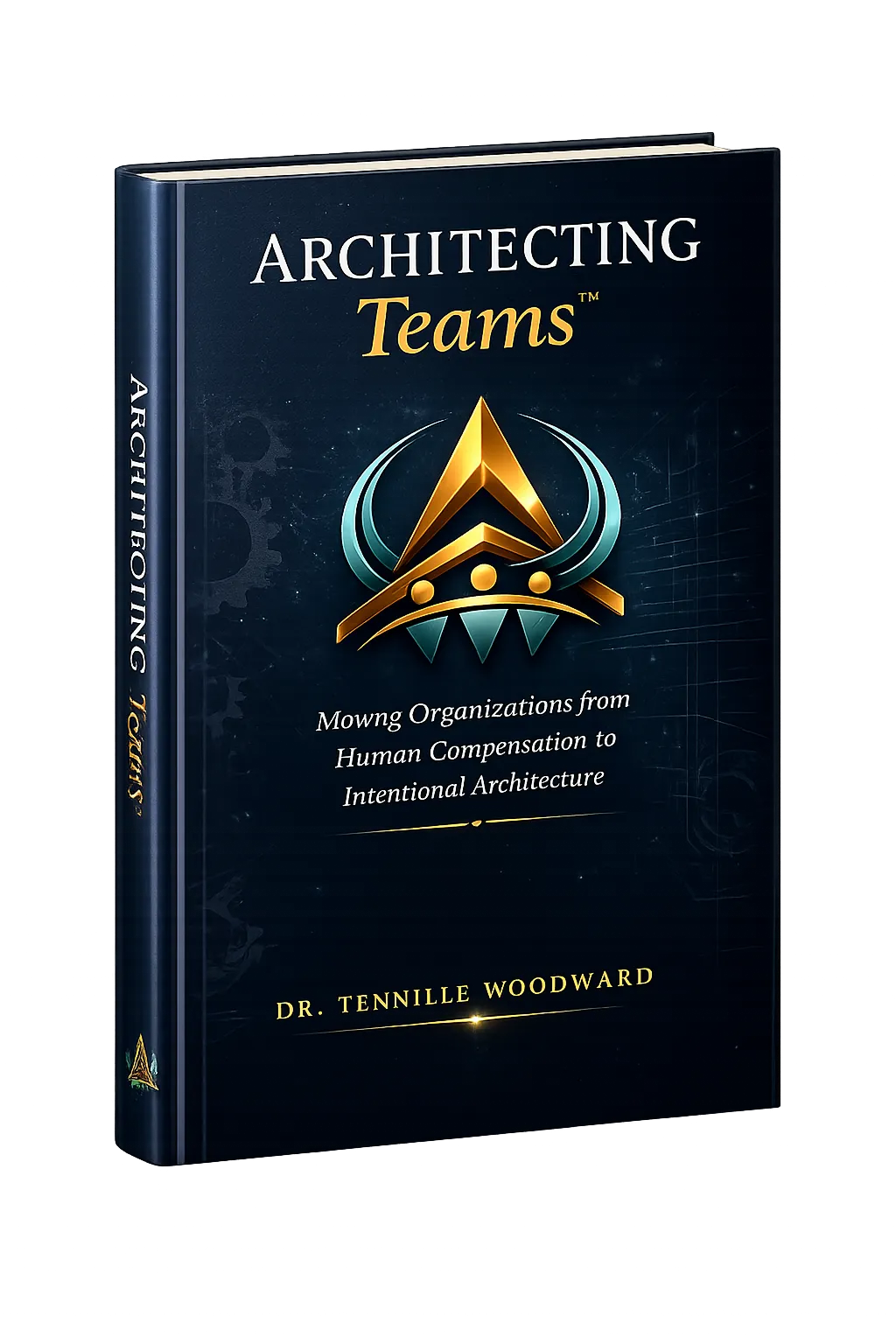
Architecting
TeamsTM
Moving Organizations from Human Compensation to Intentional Architecture
By Dr. Tennille Woodward - Founder, Architecting ExcellenceTM
Most organizations are not facing a people problem. They are facing an architecture problem.
- THE PROBLEM
Your organization is
surviving on invisible labor.
There is a phenomenon operating inside almost every organization I work with. I call it human compensation. It is what happens when the organizational architecture fails - when unclear ownership, absent escalation pathways, and fragmented systems force individuals to absorb what structures should carry.
It is not a people problem. It is an architecture problem. And architecture problems have architecture solutions.

→The same problems keep surfacing — in different people, in different meetings, in different years.
→ Your most capable leaders are the most exhausted. Commitment is being rewarded with more load.
→When someone leaves, the institutional knowledge walks out with them.
→Meetings produce conversations, not decisions. Follow-up emails replace accountability systems.
→Culture initiatives feel like they are working - until the next pressure cycle arrives and everything reverts.
→You have tried to fix it through people. The problem is in the architecture beneath the people.
- WHAT THIS BOOK IS
Not a leadership book.
An architecture book.
Most books about teams focus on trust, communication, and culture. Architecting TeamsTM goes deeper - to the operational architecture underneath team behavior. The systems, workflows, decision rights, and escalation pathways that determine whether organizations function sustainably or survive through heroics.
PART ONE
The Pressure
Why organizations are exhausted. How human compensation becomes normalized. What pressure → friction → reaction → architecture means for your organization right now.
PART TWO
The Breakdown
How unclear ownership, absent escalation pathways, fragmented alignment, and dysfunctional meetings generate the friction that produces reactive behavior - and how to read each one as an architectural signal.
PART THREE-FIVE
The Architecture
The TEAM Architecture Model™ fully deployed. The Hero Mode → Architect Mode leadership shift. A 90-day implementation sprint. The tools, diagnostics, and frameworks used in every Architecting Excellence™ engagement.
- THE FRAMEWORK
The TEAM
Architecture
Model™
Four components. Each one addresses a specific friction source. Together, they create the architecture that allows organizations to perform under pressure without requiring heroics.
T
Trust Through Clarity
Structural trust - built through clear roles, decision rights, and ownership - is the prerequisite for psychological safety at scale.
E
Escalation Pathways
Designed communication and decision flows that ensure problems reach the right level at the right time without requiring heroics to route them.
A
Alignment Systems
The structural mechanisms that allow departments and functions to operate from shared priorities - coordination by design, not by effort.
M
Meeting Architecture
Meetings designed to function as organizational infrastructure - producing clarity, decisions, and accountability rather than consuming the energy needed for everything else.
THE DIAGNOSTIC SEQUENCE
Pressure
→
Friction
→
Reaction
→
Architecture
Most organizations intervene at the reaction level — addressing the symptoms rather than the structural source. Architecting Teams™ gives you the lens to find the friction, and the tools to design the architectural response.
THE LEADERSHIP SHIFT
Hero Mode→. Architect Mode
The most dangerous leadership pattern in organizations today is hero mode - solving problems personally rather than designing systems. Architecting Teams™ maps the identity and operational shift that makes sustainable leadership possible.
- INSIDE THE BOOK
What you will leave with
Architecting Teams™ is not an inspiration book. It is an operating manual — with the diagnostics, frameworks, and implementation tools to begin redesigning your organization's architecture before you finish the last chapter.

The Human Compensation Inventory
A self-assessment for identifying where your organization is generating invisible load - across five specific domains - and what structural change would most immediately reduce it.
The TEAM Presence Audit
A domain-by-domain assessment of how well each TEAM component is functioning in your organization - and which one represents your highest leverage architectural intervention.
The 90-Day Architecture Sprint
A structured three-phase implementation process - organizational listening, architectural redesign, and stabilization - that your leadership team can begin running this week.
The P→F→R Organizational Map
A guided diagnostic for tracing your most persistent organizational challenges backward through the pressure-friction-reaction sequence to their structural root.
The Hero Mode → Architect Mode Self-Assessment
A personal diagnostic for identifying your current leadership operating pattern and the most important development shift available to you right now.
The Organizational Listening Starter Kit
Three facilitation questions for surfacing the invisible load at every level of your organization - and a guide for what to do with what you hear.
- ORGANIZATIONAL IMPACT
"Tennille brings a unique ability to listen deeply, ask the right questions, and provide insights that push thinking in meaningful ways. Her understanding of systems and how they function within an organization has helped us move beyond individual efforts toward a more cohesive and aligned approach.
What has stood out most is Tennille's ability to work effectively with a wide range of team members, meeting people where they are, building trust, and helping them see the power of working together toward shared goals. Through this process, she has helped us gain greater clarity into our operations, identify improvement opportunities, and begin building more consistent, efficient, and standardized practices across the organization."
Randy Lindquist · Superintendent · Muskegon ISD
- THE AUTHOR
Dr. Tennille Woodward
Dr. Tennille Woodward is an organizational architect, keynote speaker, and the founder of Architecting Excellence™ — a consulting practice dedicated to helping school districts and operational organizations build the intentional architecture that creates sustainable, high-level performance.
Her work sits at the intersection of systems thinking, organizational behavior, and operational design. She has consulted with district leadership teams across Michigan, spoken at MSBO, MASB, MASA, and regional leadership institutes, and spent fifteen years inside the organizations she now helps redesign.
Ed.D., Educational Systems Improvement Science
Founder, Architecting Excellence™
25+ years organizational consulting
Speaker: MSBO, MASB, MASA, AASA

- EARLY ACCESS
The book is in final production.
Be first to read it.
Architecting TeamsTM is not yet published - but it is close. Join the
early access list and you will be the first to know the moment it is
available. Everyone on the list receives the Organizational Listening
Starter Kit as a complimentary resource while you wait.
EARLY ACCESS INCLUDES
FREE RESOURCE
Organizational Listening Starter Kit
Three facilitation questions to surface invisible load - delivered immediately on sign-up
FIRST ACCESS
Launch-Day Notification + Early Buyer Pricing
You will hear before the public announcement goes out
INSIDER CONTENT
Weekly Framework Insights from the Book
The ideas behind Architecting TeamsTM delivered to your inbox before launch
EXCELLENCE IS DESIGNED
FOLLOW US


© 2026 ArchitectingExcellence™ | All Rights Reserved | Privacy Policy | Terms of Service